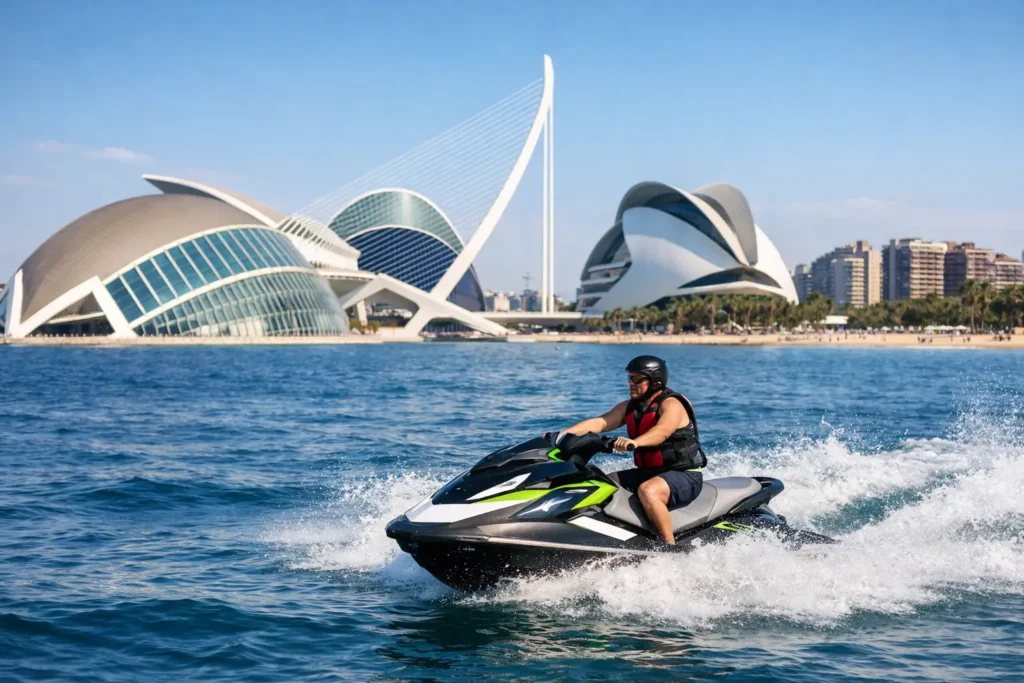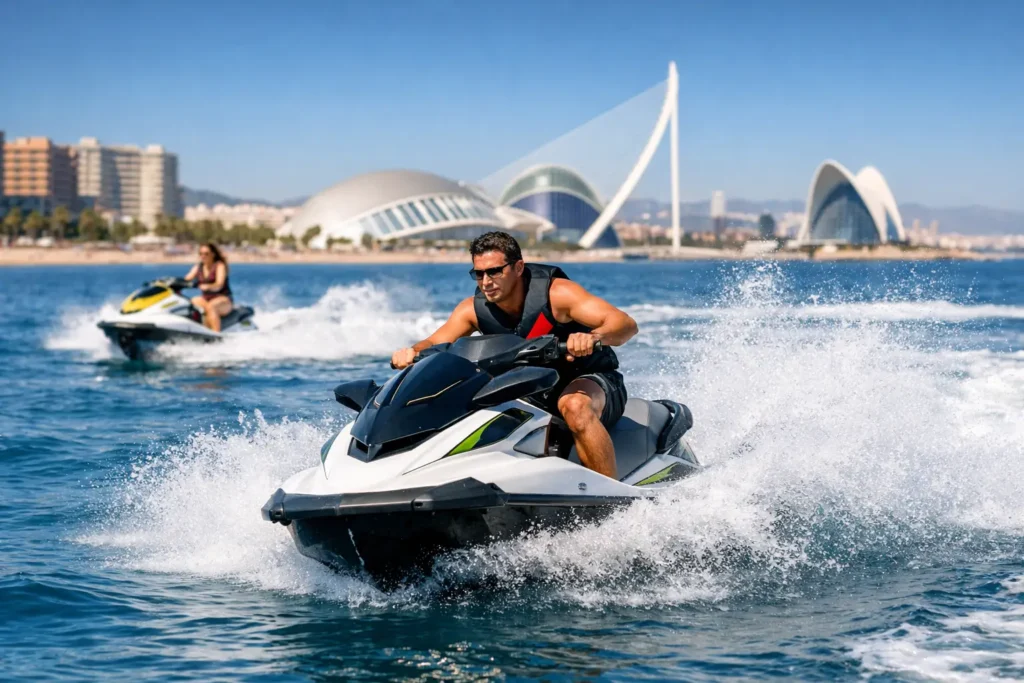
Las mejores fotos en moto acuática suelen tomarse segundos antes de acelerar a fondo y que la costa empiece a pasar a toda velocidad. Esa es la parte divertida. La parte inteligente empieza antes. Esta guía de seguridad para motos acuáticas en el Mediterráneo está pensada para quienes buscan emociones fuertes sin cometer errores de principiante, especialmente si reservas una sesión de vacaciones y quieres que sea una experiencia de primera clase, fluida y con total control.
El Mediterráneo puede parecer tranquilo desde la costa, pero una vez en el agua, su comportamiento es muy diferente. El oleaje ligero, el viento cambiante, el tráfico marítimo y el sol brillante influyen en la experiencia. Nada de esto debería desanimarte. Simplemente significa que una experiencia inolvidable depende de la combinación adecuada de emoción, atención y un buen servicio de asistencia al cliente.
Por qué las condiciones mediterráneas requieren una mentalidad diferente
Una sesión en moto acuática en el Mediterráneo no es lo mismo que navegar en un lago interior tranquilo. El entorno es más pintoresco, más abierto y, a menudo, más expuesto. Se disfruta de mayor visibilidad, las condiciones de la superficie cambian y se comparte el agua con barcos, embarcaciones de remo y bañistas, según la zona y la temporada.
Eso importa porque la confianza y el control no son lo mismo. Muchos principiantes se sienten seguros después de treinta segundos acelerando. El control requiere más tiempo. El oleaje puede sacudir el casco más de lo esperado, y el resplandor del sol dificulta calcular las distancias. En días de mucho tráfico, los pilotos más seguros no son los más temerarios, sino los que se mantienen alerta.
Si navegas cerca de un puerto deportivo o por un tramo de costa concurrido, la clave es sencilla: respeta las instrucciones, respeta el mar y resiste la tentación de lucirte demasiado pronto. La velocidad puede esperar. Una navegación limpia y controlada siempre luce mejor.
Guía de seguridad para motos acuáticas en el Mediterráneo: qué hacer antes de subir a bordo.
La mayoría de los problemas de seguridad comienzan incluso antes de arrancar el motor. Los pasajeros llegan deshidratados, quemados por el sol, con resaca, tarde o distraídos. Esa no es la versión premium de la experiencia.
Empiece por lo básico. Coma ligero, beba agua y use un traje de baño adecuado o ropa de secado rápido. Si llevas gafas de sol, asegúrate de que estén bien sujetas. Si llevas un teléfono móvil, asume que se mojará a menos que el operador te indique lo contrario. Y si tienes alguna condición médica que pueda afectar tu equilibrio, agarre o tiempo de reacción, infórmanos antes de la sesión. Los buenos operadores prefieren adaptar la experiencia a tener problemas en alta mar.
Lleguen preparados para escuchar. La sesión informativa no es un simple preámbulo a la diversión, sino lo que permite que la diversión se desarrolle plenamente. Recibirán instrucciones claras sobre el arranque, la parada, la respuesta del acelerador, la distancia de seguridad, la técnica de giro y los procedimientos de emergencia. Si algo no les queda claro, pregunten. No tiene sentido fingir que se entiende y luego entrar en pánico en alta mar.
También conviene comprobar qué tipo de viaje estás reservando. experiencia costera guiada Es diferente a practicar freeride. Para muchos ciclistas de vacaciones, las sesiones guiadas son la mejor opción. Disfrutas de la emoción, las vistas y el ritmo, pero con más estructura y menos margen para tomar malas decisiones.
Así es como se practica la navegación segura en el agua.
Conducir con seguridad no es lento ni aburrido. Es suave, atento y preciso. Los mejores pilotos hacen que la máquina parezca fácil porque interpretan el agua, no luchan contra ella.
La primera regla es la distancia. Deja suficiente espacio entre tu moto acuática y la que te precede. El agua no es una carretera, y las distancias de frenado no son precisas ni predecibles. Si el conductor de delante frena bruscamente o se encuentra con una zona de oleaje fuerte, necesitas tiempo para reaccionar. Conducir pegado al coche de delante es tan imprudente como suena.
La segunda regla es el control gradual del acelerador. Los pilotos principiantes suelen acelerar bruscamente o frenar de golpe. Esto genera inestabilidad y les hace perder confianza. Acelere suavemente, sobre todo al arrancar, girar o cruzar la estela de la moto acuática. Un piloto con control siempre da una imagen más segura que alguien que va a toda velocidad sin control.
La postura corporal también es importante. Mantén un agarre firme pero relajado, flexiona ligeramente los brazos y mantén el equilibrio sobre las piernas en lugar de tensar los hombros. Cuando el agua se agite, deja que tu cuerpo absorba el movimiento. Si te tensas, cada ola se sentirá más fuerte.
Luego está el tema de los giros. Muchos principiantes cometen el error de intentar girar bruscamente mientras dudan en acelerar. En la mayoría de las motos acuáticas, la dirección responde mejor cuando se acciona el acelerador correctamente. Esto no significa entrar a toda velocidad en las curvas, sino escuchar atentamente las instrucciones y aplicar la técnica que se ha enseñado, en lugar de improvisar.
Leer el mar antes de que él te lea a ti
El Mediterráneo puede cambiar de rumbo con la suficiente rapidez como para sorprender a cualquiera que crea que aguas tranquilas significan aguas en calma. El viento suele ser el factor decisivo. Una zona de botadura que parece tranquila puede convertirse en un oleaje más fuerte una vez que uno se aleja de la protección, especialmente cerca de las salidas de los puertos o en tramos de costa expuestos.
Las pequeñas olas son normales y, por lo general, forman parte de la diversión. Las olas más grandes y cruzadas son otra cosa. Pueden desestabilizar a los principiantes y dificultar el recorrido en línea recta. Si las condiciones son más agitadas de lo esperado, no hay problema en mantener un ritmo más constante. Una sesión inteligente sigue siendo una sesión brillante.
Mira hacia adelante, no solo directamente frente a la moto acuática. Observa otras embarcaciones, los cambios en el oleaje y las instrucciones del guía. Si estás en una excursión guiada, el ritmo del guía ya contribuye a tu seguridad. Mantente en formación según las instrucciones. No te desvíes solo porque viste un buen ángulo para grabar un video.
El sol y el calor también suelen subestimarse. El resplandor reduce la visibilidad. El calor dificulta la concentración. La bruma salina se seca en la piel y te das cuenta demasiado tarde de que deberías haber bebido más agua antes. Si quieres tener energía en el agua, empieza con una preparación básica en tierra.
Errores comunes que cometen los ciclistas principiantes
Mayoría Los errores son predecibles. La buena noticia es que los errores predecibles son más fáciles de evitar.
Una de las consecuencias es el exceso de confianza tras la primera bajada rápida. La máquina se siente emocionante, manejable y con buena respuesta, por lo que algunos pilotos creen haberla dominado al instante. Ese suele ser el momento en que se pierde la precisión, los giros se vuelven imprecisos y se empiezan a ignorar las instrucciones.
Otro ejemplo es la fijación. Los pilotos se quedan mirando el obstáculo, la estela o la otra moto acuática que quieren evitar, y luego se dirigen hacia él. Tus ojos marcan tu dirección. Mira hacia donde quieres ir.
Una tercera opción es tratar la ruta como si fuera un vídeo de acrobacias. Las sesiones en el Mediterráneo son ideales para crear contenido inolvidable, pero la mentalidad de filmación puede arruinar el juicio al montar. La prioridad siempre es el control, la cámara después. Las mejores tomas de acción las consiguen los pilotos que se ven relajados y serenos, no imprudentes.
Y, por último, la gente subestima la fatiga. Incluso un paseo corto puede ser físicamente más exigente de lo esperado, sobre todo con sol intenso o aguas agitadas. Si pierdes el control o la concentración, es el momento de bajar el ritmo y pedalear con más suavidad.
Elegir un operador que se tome la seguridad en serio
No todas las experiencias en moto acuática son iguales, aunque las fotos en internet parezcan similares. Si te importa la seguridad, la relación calidad-precio y una experiencia de primera, el operador es tan importante como la máquina.
Busca motos acuáticas con mantenimiento profesional, instrucciones claras antes de la salida, supervisión estructurada y una experiencia organizada desde el principio. Premium no significa rígido ni complicado. Significa que la sesión se desarrolla correctamente. Reservar es sencillo, el equipo es experto, el equipo inspira confianza y nunca te quedarás con la duda de qué sucederá después.
Esto es especialmente relevante para quienes reservan en una ciudad como Valencia, donde buscan emociones fuertes sin perder medio día en engorrosa logística. Un servicio directo desde el puerto deportivo, equipo de calidad y personal que conoce las condiciones locales marcan la diferencia. JetskiXperience se centra precisamente en ofrecer una experiencia impecable: altos estándares de seguridad, acceso rápido al Mediterráneo y una experiencia de lujo sin un precio desorbitado.
Guía de seguridad para motos acuáticas en el Mediterráneo para parejas y grupos.
Si se monta en pareja o en un grupo pequeño, la seguridad se convierte en parte en una cuestión social. La dinámica cambia cuando los amigos intentan superarse unos a otros o cuando un ciclista tiene mucha más confianza que los demás.
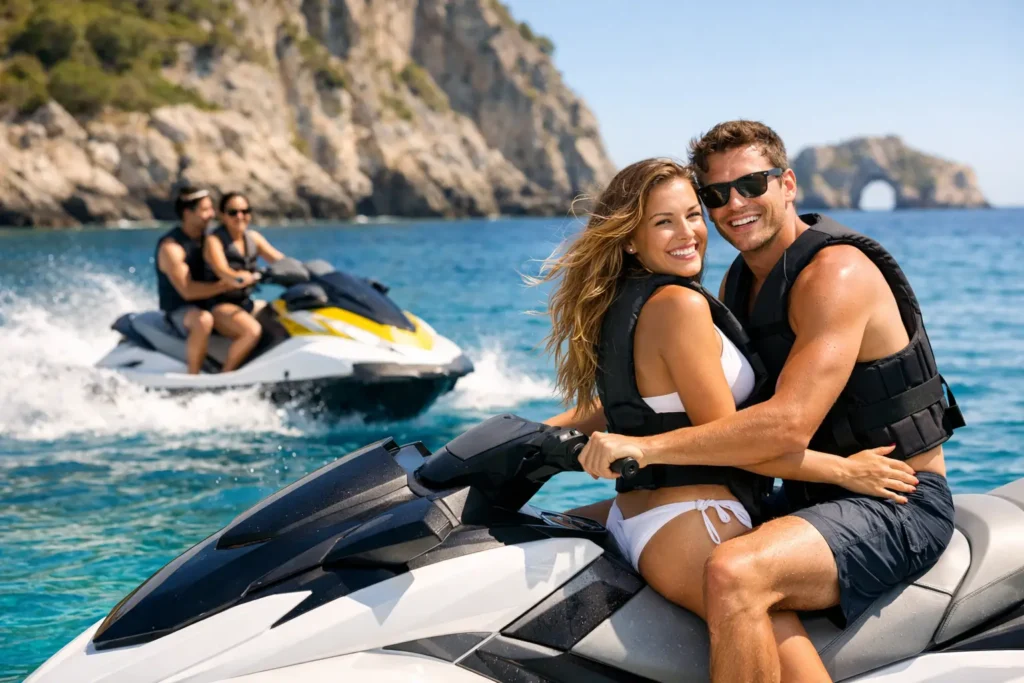
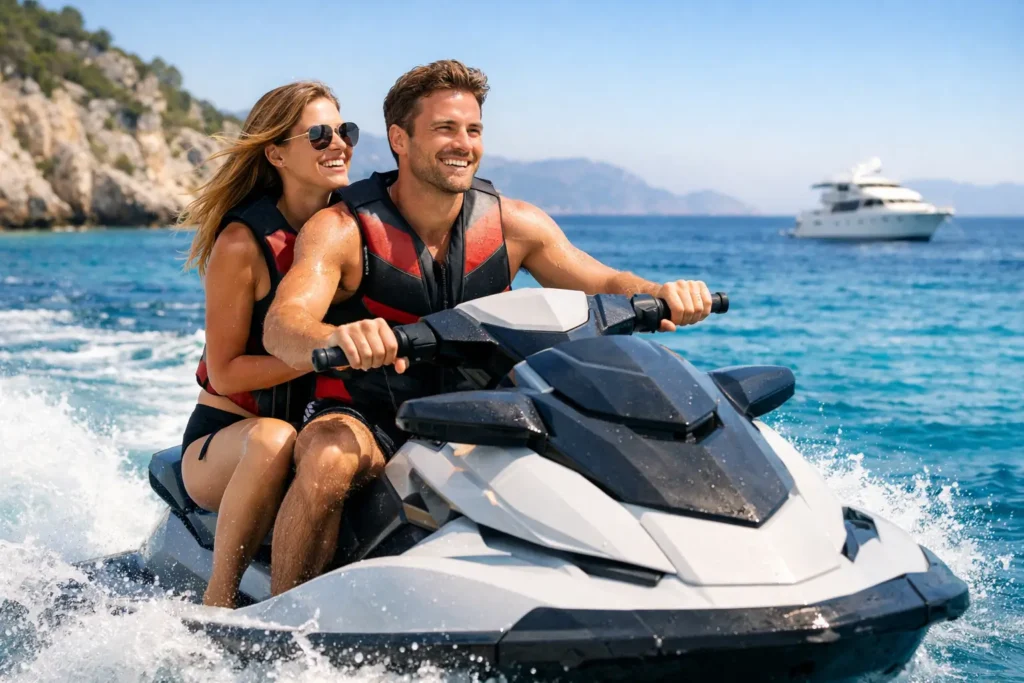
Para las parejas que comparten una moto acuática, la comunicación es fundamental. El pasajero debe saber cómo sujetarse, cómo inclinarse junto al conductor y cuándo esperar aceleración. Los cambios bruscos de peso corporal pueden afectar el equilibrio, especialmente en curvas o con oleaje. Un conductor con buena técnica mejora la experiencia para ambos.
En grupo, eviten convertir la sesión en una competición a menos que el organizador haya establecido un formato para ello. Las carreras informales, los adelantamientos arriesgados y las maniobras peligrosas pueden convertir la energía de las vacaciones en imprudencia. Mantengan el estilo y la precisión. Pueden disfrutar de una gran dosis de adrenalina sin necesidad de demostrar nada a los demás.
Después del viaje, la parte inteligente continúa
La sesión no termina realmente cuando se apaga el motor. Baja con cuidado, hidrátate y tómate un minuto para recuperar el equilibrio. La sal, el sol y la adrenalina pueden dejarte más cansado de lo esperado.
También vale la pena prestar atención a cómo se desarrolló la experiencia. Los mejores operadores hacen que la seguridad parezca algo natural, no una imposición. Te vas con la emoción de la atracción, algunas fotos memorables y la sensación de que todo se manejó correctamente de principio a fin. Eso es lo que la gente recuerda.
Un paseo en moto acuática por el Mediterráneo debería ser una experiencia libre, rápida e inolvidable. La clave está en que la verdadera libertad en el agua proviene de la organización, no del caos. Si dominas lo básico, eliges un operador que conozca la costa y podrás disfrutar de la emoción con confianza, en lugar de depender de la suerte.