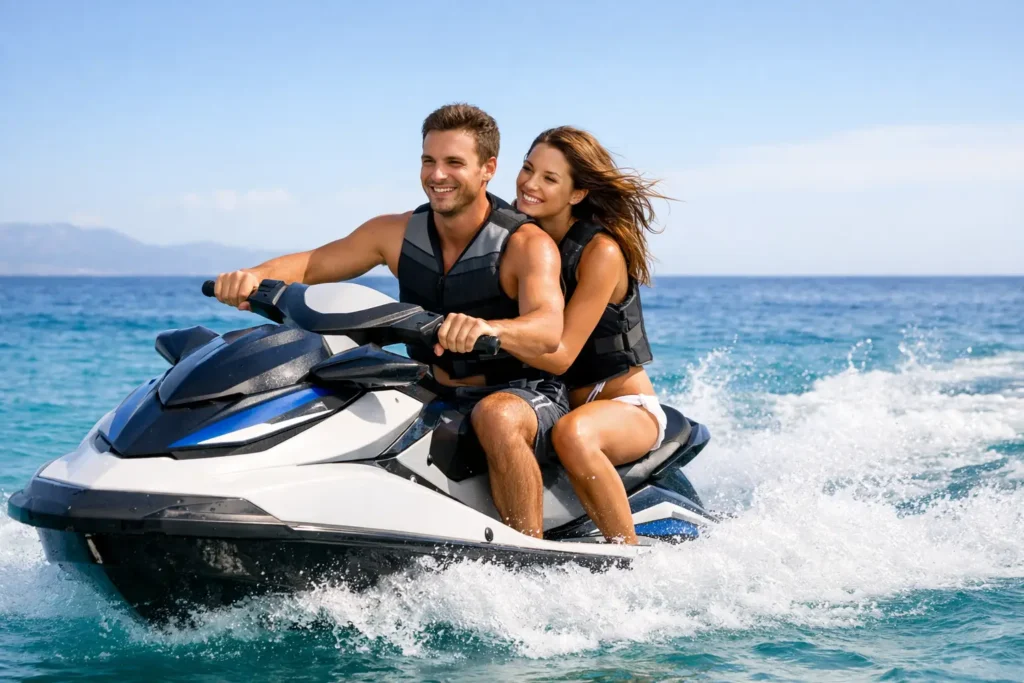
You are stood at the marina, the sun is out, the water looks perfect, and the first question lands fast: can two people ride one jetski? Usually, yes. But not every jetski, not every rider pairing, and not every session is set up the same way. If you want the ride to feel thrilling rather than cramped, awkward or unsafe, a few details matter before you head out.
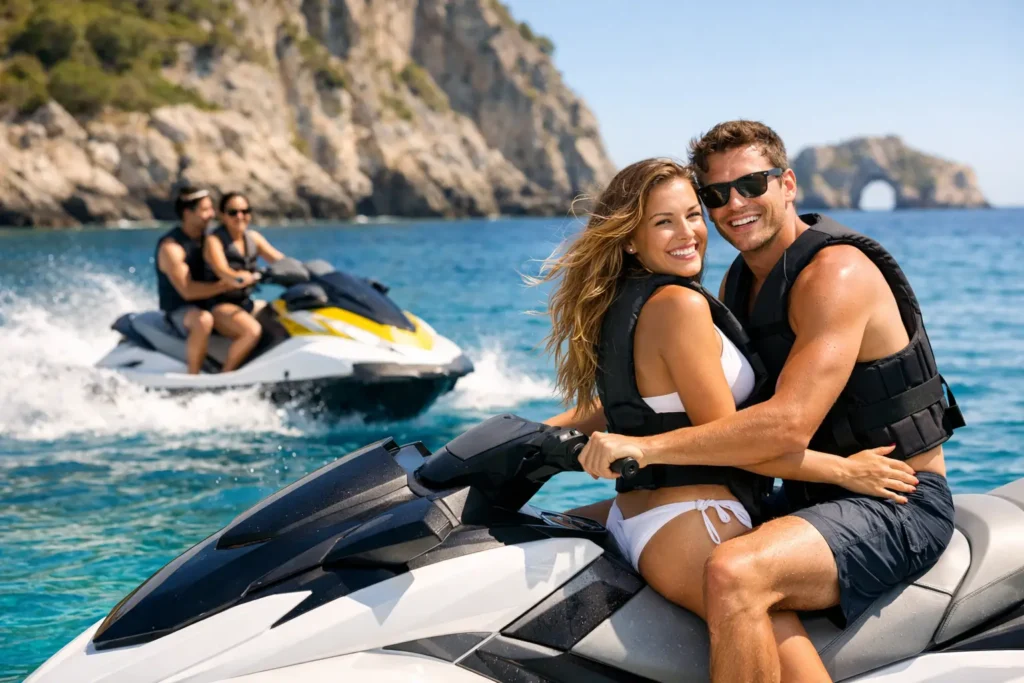
For couples, friends and small groups, sharing one jetski can be the sweet spot. It keeps the experience social, makes it easier for first-timers to feel confident, and often turns the ride into something more cinematic – one person driving, one person soaking up the speed, spray and Mediterranean views. The key is knowing where the line is between allowed and advisable.
Can two people ride one jetski legally?
In many cases, yes, two people can ride one jetski legally. Most modern recreational jetskis are built for more than one rider, and many rental operators use two- or three-person models as standard. That said, legality depends on local maritime rules, the type of craft, and the operator’s own safety policy.
This is where people get caught out. They assume that if a seat looks long enough, two adults are fine. That is not how it works. Passenger capacity is set by the manufacturer, and reputable operators follow that limit closely. If a jetski is rated for one rider, that is the end of the conversation. If it is rated for two or three, then the next question is weight, balance and conditions on the day.
For a guided leisure ride, operators also need to think beyond the legal minimum. Wind, chop, rider confidence and experience level all affect whether two-up riding is a smart choice. A premium operator will not wave you through just because it is technically possible.
When can two people ride one jetski comfortably?
Comfort is the bigger issue than legality for most holiday riders. Two people can absolutely share one jetski and have an amazing time, but the fit needs to be right. The machine needs enough seat space, enough power and enough stability to carry both riders without making every turn feel heavy.
A good passenger setup usually works best when the two riders are reasonably within the craft’s intended load range and are happy to ride as a team. The driver controls the throttle, steering and trim of the ride. The passenger needs to hold on properly, follow body movement through turns and avoid shifting weight unexpectedly. When both people understand that rhythm, the ride feels smooth, fast and fun.
When that rhythm is missing, the experience changes quickly. A nervous passenger can tense up, lean the wrong way or grab at the driver at the wrong moment. A driver with very little confidence may find the extra weight slows reactions and makes tight manoeuvres feel harder. That does not mean two riders are a bad idea. It means the best setup depends on who is riding and what kind of session they want.
If your goal is pure adrenaline, solo riding often feels sharper. If your goal is to share the moment, take photos, laugh through the first acceleration and enjoy the water together, two on one jetski can be perfect.
Weight limits matter more than most people think
This is the practical part people often ignore. Every jetski has a maximum rider capacity and a maximum load. Those numbers are there for stability, handling and safety, not just paperwork.
Even if a craft is approved for two or three people, that does not automatically mean any combination of adults will be ideal. Combined body weight affects how high the jetski sits in the water, how quickly it planes, how responsive it feels in turns and how confidently it handles rougher surface conditions.
A lighter pair may enjoy a very lively, agile ride. A heavier pair may still be perfectly safe on the same craft, but the ride can feel less aggressive and more planted. In rougher conditions, extra load can make the machine feel more demanding. That is why quality operators assess real-world suitability, not just the sticker on the hull.
If you are booking as a pair, be honest about who wants to drive, how experienced you both are and whether you want a relaxed scenic ride or a sportier session. Good advice before launch makes a better ride once you are on the water.
Driver and passenger roles are not equal
One mistake first-timers make is thinking the passenger is just along for the ride. Not quite. On a jetski, the passenger plays a real part in balance and control.
The driver needs enough confidence to manage throttle smoothly, especially when starting, turning and crossing wake. Sudden acceleration with a passenger who is not braced properly can unsettle both riders. Equally, chopping the throttle at the wrong moment can affect steering response. This is why the safety briefing matters. It is not there to kill the mood. It is there to make the fun last longer.
The passenger should sit close behind the driver, hold on where instructed and move with the craft rather than against it. Leaning out unexpectedly or shifting position for a photo in the middle of a turn is a fast way to make the ride messy. If the passenger is confident, communicative and steady, the whole experience feels better.
For many couples, one of the best options is to start with the more confident person driving. Once everyone settles in, some operators may allow a switch if conditions, licensing rules and session format permit it. That flexibility depends on the experience setup.
Is one jetski for two people better value?
Often, yes. If you are travelling as a couple or with a friend, sharing one jetski can be a smart balance of price and experience. You split the cost, stay together and still get the speed, the sea air and the photo-worthy moments without needing separate machines.
There is a trade-off though. Shared riding means one person is not driving the whole time, and if the main attraction for both of you is controlling your own craft, two separate jetskis will feel more exciting. It comes down to what kind of memory you want to take home.
For many leisure travellers, especially first-timers, one jetski between two people is the ideal entry point. It feels premium, accessible and social all at once. You get the buzz without overcomplicating the day.
Can two people ride one jetski if they are beginners?
Yes, and for beginners it can actually be the better option. A first-time rider often feels more confident with a passenger they know, particularly in a guided setting with a proper briefing. Sharing the ride can take some pressure off and make the session feel more natural from the first few minutes.
That said, beginner plus beginner is not always easier than beginner plus experienced rider. If neither person has been on a jetski before, the operator’s guidance becomes even more important. Calm instruction, clear safety rules and well-maintained equipment make all the difference.
This is where experience quality matters. A polished setup from marina departure to on-water briefing removes friction. You spend less time guessing and more time enjoying the ride. That is exactly why many travellers choose an operator that packages jetski hire as an experience, not just a machine handover.
What to ask before you book
If you are wondering can two people ride one jetski on your trip, ask the right questions early. Check how many riders the jetski is approved for, whether there is a combined weight limit, and whether the session is guided or free ride. Ask if beginners can ride with a passenger and whether rider swaps are possible during the booking.
You should also ask what the water conditions are usually like at your chosen time. A morning ride on calmer water may suit two riders far better than a windier afternoon slot. Small details shape the whole experience.
At JetskiXperience, this kind of clarity matters because people are not just booking equipment. They are booking a holiday moment they want to remember properly.
The real answer to can two people ride one jetski
Yes, two people can ride one jetski – if the craft is designed for it, the combined weight is suitable, and the operator is happy with the setup. For plenty of couples and friends, it is one of the best ways to enjoy the water together. It is fun, photogenic and often better value than people expect.
But the best rides are not built on guesswork. They come from the right machine, the right conditions and a safety-first team that knows when two-up riding will feel incredible and when another setup makes more sense.
If you are planning a day on the water, think less about whether two people can squeeze onto one seat and more about whether the whole experience is designed to feel smooth, premium and genuinely exciting. That is when a jetski ride stops being just another activity and starts becoming the part of the trip you talk about first.