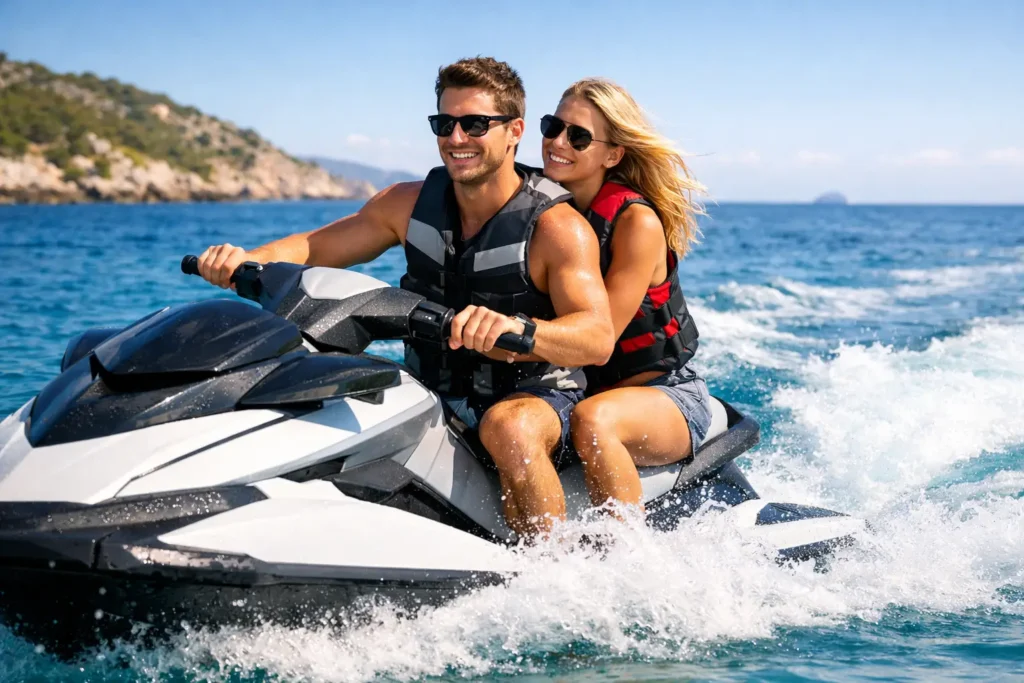
The first minute on a jetski tells you everything. If you climb on tense, grip too hard and squeeze the throttle like it is a race start, the ride can feel choppy and harder than it should. If you know how to ride a jetski safely, the whole experience changes. You feel more in control, you read the water better, and you enjoy the speed without doing anything reckless.
That balance matters. A jetski should feel exciting, not chaotic. Whether it is your first session on the Mediterranean or you have ridden before on holiday, safe technique is what makes the ride smoother, faster and more enjoyable.
How to ride a jetski safely from the start
Safe riding begins before the engine even starts. Listen to the briefing properly. Not half-listen while looking at the sea. The instructor is not just covering rules for form’s sake. They are showing you how the machine responds, what the local water conditions are like, and where the limits sit.
A modern jetski is powerful, responsive and easy to enjoy, but it is still a high-performance craft. That means your body position, throttle control and awareness all matter. Put your life jacket on correctly, check that the kill cord is attached if your operator uses one, and make sure you know the basic controls before leaving the marina.
If anything feels unclear, ask. New riders often worry about asking a basic question. Do not. The smartest riders are usually the calmest ones, and calm starts with clarity.
Get your body position right
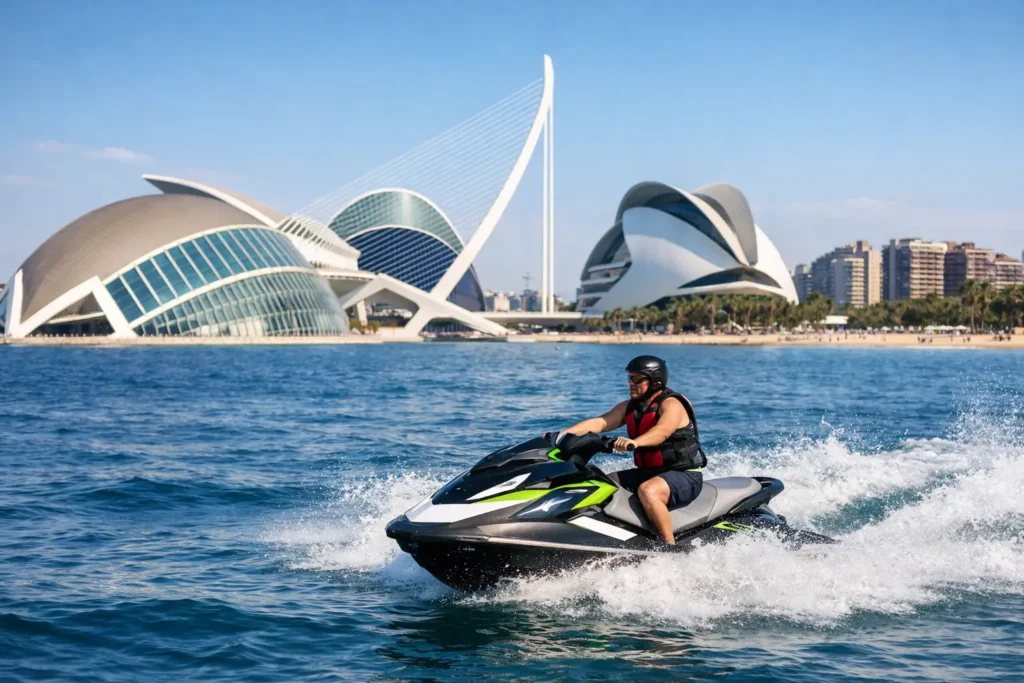
One of the biggest mistakes beginners make is sitting stiff and upright like they are on a chair. A jetski works better when you stay relaxed and slightly athletic in your posture. Keep both hands firm on the handlebars, your feet planted, and your knees soft enough to absorb movement from the water.
When the surface gets choppy, let your legs and core help you stabilise rather than fighting every bump with your arms. If you lock your body, the ride feels rougher and steering becomes less precise. If you stay loose and balanced, the craft moves more naturally beneath you.
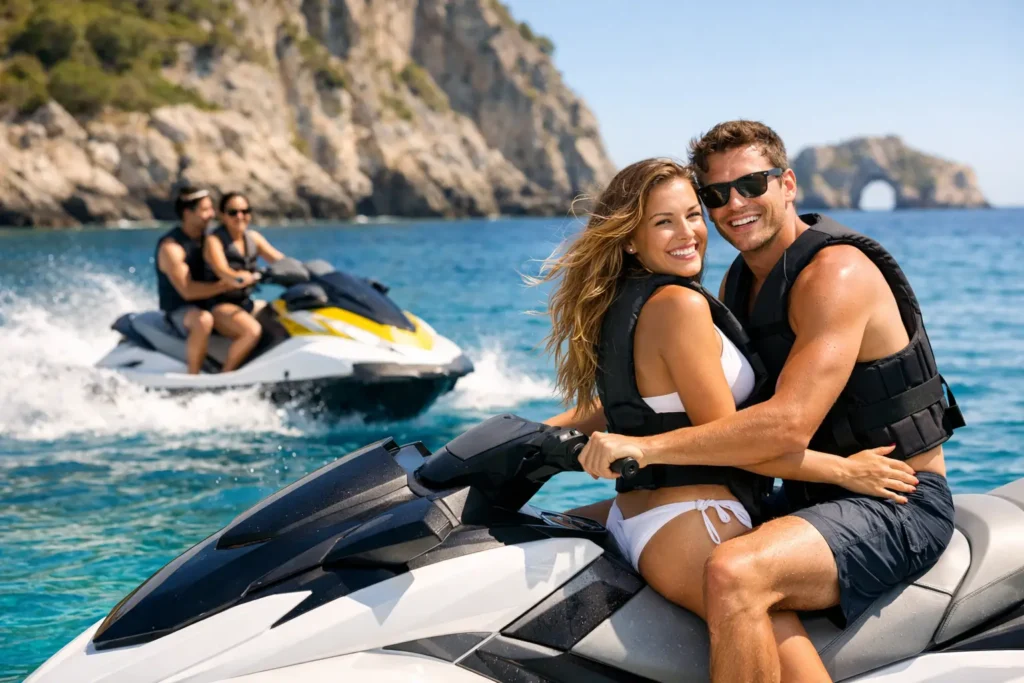
With a passenger, the same rule applies twice. The rider and passenger need to move with the jetski, not against it. Sudden leaning or shifting weight at the wrong moment can unsettle the craft, especially in turns.
Respect the throttle
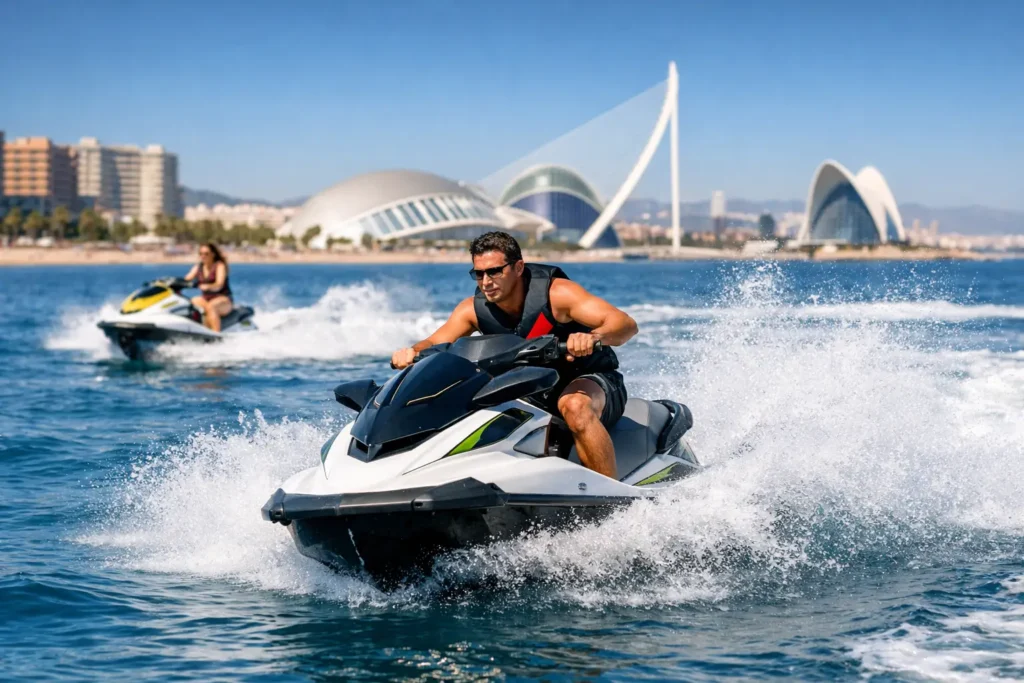
Throttle control is where confidence is built or lost. Smooth acceleration is safer than sudden bursts. Roll on the power progressively so the jetski lifts and planes cleanly, instead of lurching forward and throwing your balance off.
This is especially important in busy areas, near departure zones, or when you are still getting used to the steering. A jetski can feel deceptively easy at low speed and surprisingly lively once you add more power. The trick is to build speed in a measured way and leave yourself time to react.
A lot of first-time riders think safety means going slowly all the time. Not quite. Going too slowly in chop can sometimes make the ride feel less stable. The real answer is controlled speed – appropriate for the conditions, your ability and the space around you.
Steering, distance and turning without drama
Here is the part many new riders do not expect: a jetski needs throttle to steer effectively. If you panic and completely let go of the throttle while trying to avoid something, you may reduce your ability to turn cleanly. That is why anticipation matters so much.
Look well ahead, not only at the water directly in front of you. Spot other craft early. Read where waves are forming. Notice swimmers, boats and marker buoys in good time. The more forward your vision is, the less likely you are to make abrupt moves.
When turning, ease into the curve instead of wrenching the handlebars. Lean naturally with the craft and keep your movement smooth. Sharp turns at the wrong speed can throw a passenger off balance or make the ride feel unstable. Tight manoeuvres have their place, but they should be done only when the area is clear and the operator allows it.
Distance is another basic that separates smart riding from sloppy riding. Leave more space than you think you need between you and other water users. Water is dynamic. People change direction, waves alter speed, and visibility shifts quickly with sun glare. A generous buffer gives you options.
Why stopping distance matters on water
A jetski does not stop like a car. There is glide, movement from the water itself, and the possibility of wake affecting your path. Even when you slow down, you still need room. This is one reason crowding another craft is a bad idea, even if everyone seems in control.
If you are riding in a guided group, keep formation as instructed. Do not overtake unless told to. Group rides work best when spacing stays predictable and every rider avoids showing off.
Sea conditions change everything
The safest speed on flat water may be the wrong speed ten minutes later if the wind picks up or boat traffic increases. That is why good riders do not just focus on the machine. They read the sea.
Small chop, crossing wakes and glare from bright sun can all affect visibility and comfort. In open water, wave patterns may look manageable from a distance and feel very different once you reach them. If the sea becomes rougher, ease off, widen your stance slightly and keep your line tidy.
This is where local knowledge helps. Conditions on the Mediterranean can look inviting and still demand respect. An experienced operator will know the best riding zones, no-go areas and the day’s realistic limits. If you are hiring in Valencia, for example, departing directly from the marina with a professional briefing gives you a much cleaner, safer start than trying to figure things out on your own.
Weather is not a background detail
Bright skies do not automatically mean easy riding. Wind matters as much as sunshine. Strong gusts can create surface chop fast, and that changes how comfortable a ride feels for beginners. If your provider advises caution, route changes or a slower session, that is not overprotective. It is good judgement.
The best experience is not always the wildest one. Sometimes the smartest call is a cleaner, more controlled ride in better water.
Safety gear and clothing that actually help
Your life jacket is non-negotiable. It should fit properly, feel secure and stay fastened throughout the ride. Loose or badly fitted gear is not just annoying, it reduces confidence when the craft starts moving at speed.
Beyond that, dress for grip and comfort. Swimwear is fine, but think about practicality. Secure footwear can help depending on the operator’s rules. Sunglasses are great until they fly off. Mobile phones should be stored properly, not balanced in a hand for a mid-ride video.
If you want the photos, get them in the safe moments or let the operator handle them. The best-looking rides are usually the ones where the rider is fully present, not distracted.
First-time rider mistakes to avoid
Most safety issues come from a few predictable errors. Riders overestimate their control, underestimate stopping distance, or get distracted by the excitement of being out on the water. It happens quickly.
The other common mistake is trying to impress a passenger or the rest of the group. Fast launches, aggressive turns and late reactions do not look premium. They look inexperienced. A confident rider is smooth, aware and easy to ride with.
Another one is ignoring fatigue. Riding a jetski is fun, but it uses more energy than many people expect, especially in chop. If your arms are burning and your reactions are getting slower, back off a little. There is no prize for finishing tired and sloppy.
How to ride a jetski safely with a passenger
Taking a passenger changes the feel of the craft. The jetski sits differently in the water, takes longer to respond and needs more measured input from the rider. That does not make it difficult, but it does mean you should dial up the smoothness.
Brief your passenger before moving off. Tell them to hold on properly, keep their feet in place and lean with you rather than against you. Sudden movement from the back can upset balance, especially during turns or when crossing wake.
Keep acceleration progressive and avoid sharp direction changes. If your passenger is nervous, speak clearly and keep the first few minutes calm. Once they trust the ride, everyone enjoys it more.
Choose a professional operator, not just a cheap one
Price matters, of course. But value is about more than the booking screen. A quality operator gives you well-maintained jetskis, a clear safety briefing, organised departure procedures and staff who know when to push the fun and when to slow things down.
That combination is what turns a holiday activity into a standout memory. It should feel exciting, polished and properly managed from start to finish. JetskiXperience builds that around direct marina departure, maintained equipment and safety-led guidance, which is exactly what many first-time riders need.
If you want the freedom, speed and photo-worthy moments, start with the basics and respect the sea. The better you ride, the better it feels – and that is when a jetski really comes alive.